Questions from backers, answered
Does the TinyNES support Famicom games?
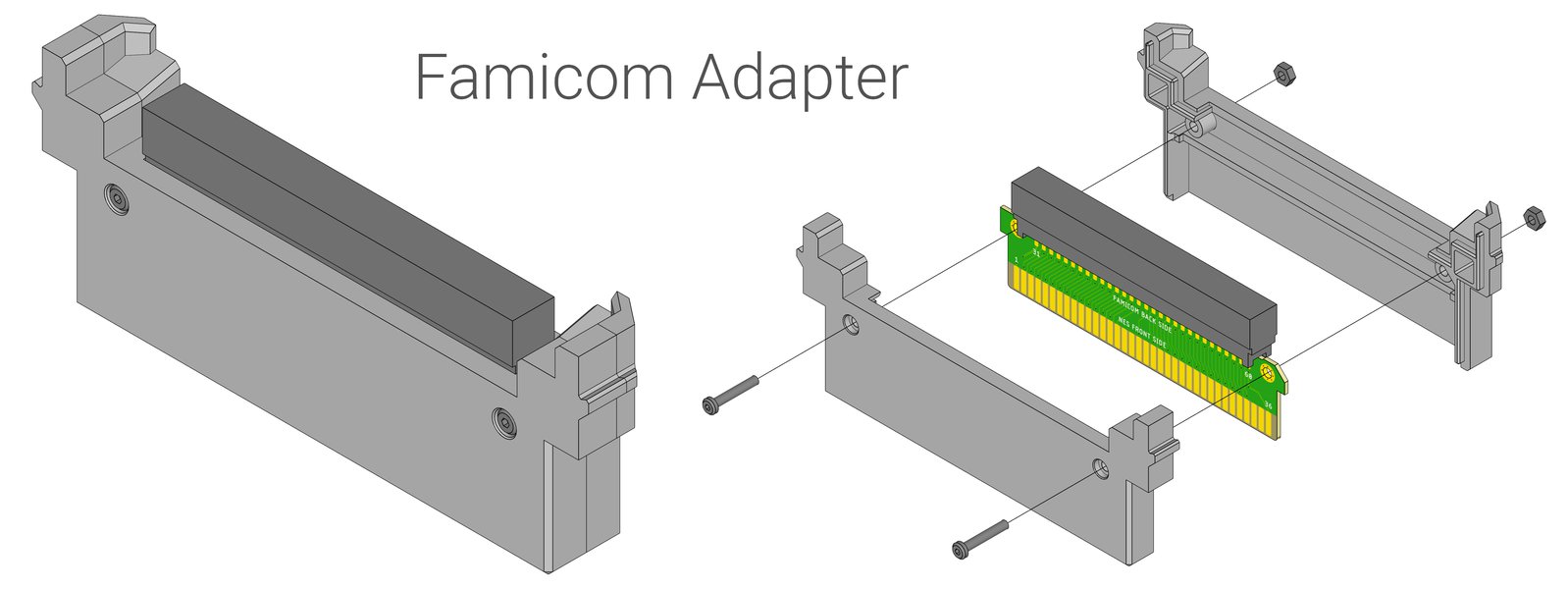
Yes, but with an adapter. Famicom games use a different board-edge connector that has 60 instead of 72 pins (and the pitch is very slightly different too). Otherwise, the games are compatible, since the internal hardware of the original Famicom and NES systems was remarkably similar. (For Famicom “expansion audio” support, see below.)
While we would love to have a dedicated Famicom cartridge slot on the TinyNES, this first hardware release doesn’t have one, primarily because of physical space. While it’s conceivable a Famicom slot could be squeezed into the same console form-factor, we’re not ready to do that right away. Perhaps a future (major) hardware revision will add a dedicated Famicom connector.
What is expansion audio and does the TinyNES support it?
Famicom games had the capacity to generate and mix their own sound effects. Not many games took advantage of this, but a handful of them did. Famicom carts have audio in (45) and out (46) pins specifically for this purpose. However, NES games don’t have these pins. As a result, playing Famicom games using an adapter or from a flash cart on an NES means some of the original sound will be missing.
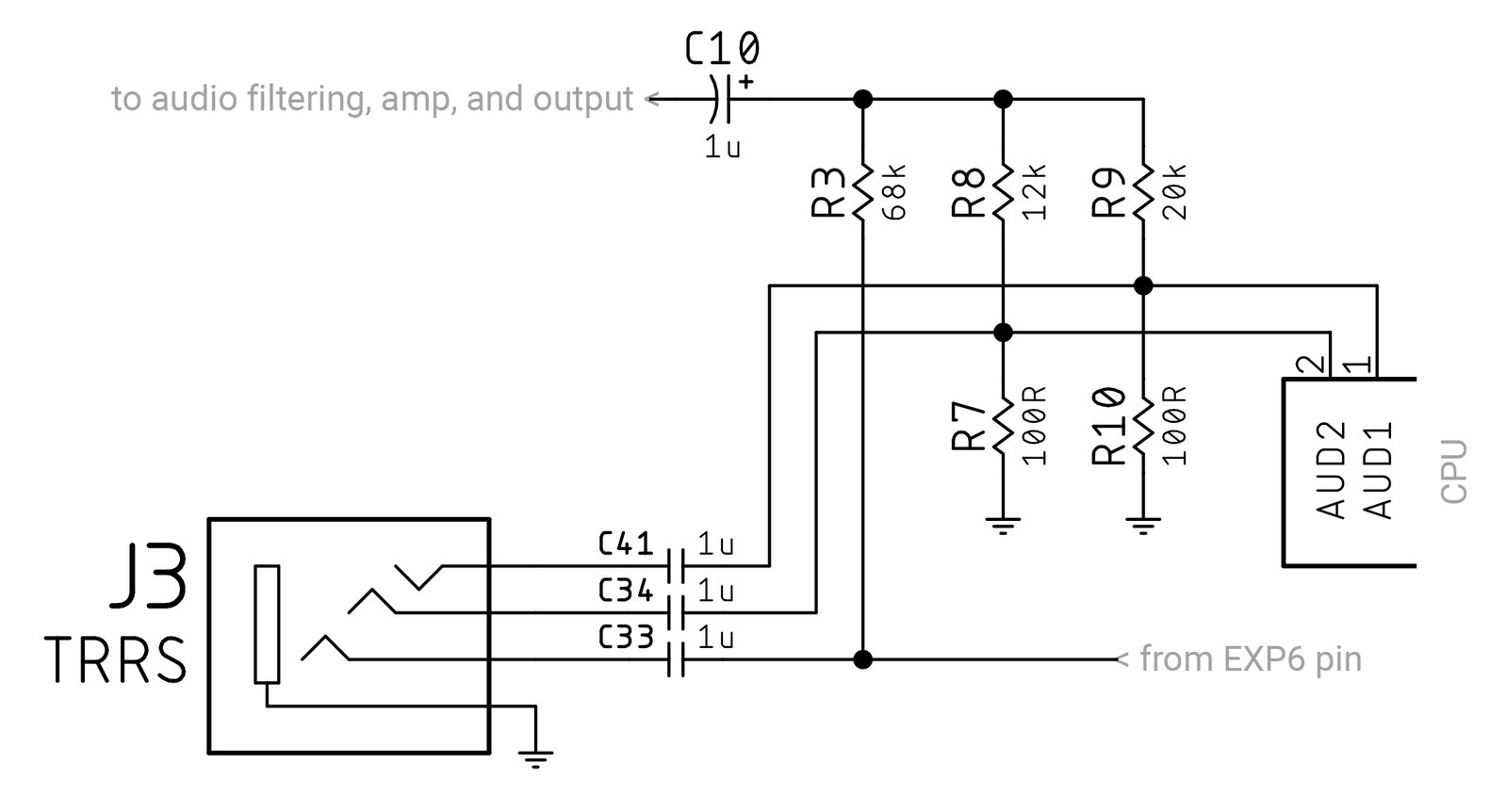
NES carts have an additional 10 expansion pins that are largely unused, so a de facto standard has emerged of using expansion pin 6 to carry this extra audio. Original front-loading NES systems have a hidden expansion port with an audio input pin, so it’s quite easy to add (via soldering) support for this additional audio. Instead of being mixed in the cart and then returned to the system for output, the additional audio is mixed in the console.
The answer in regards to TinyNES support is: yes, we are planning to support expansion audio! It’s technically quite simple, and the details are currently being worked on, so stay tuned. We are also considering the idea of bundling a Famicom to NES cart converter with built-in expansion audio support too.
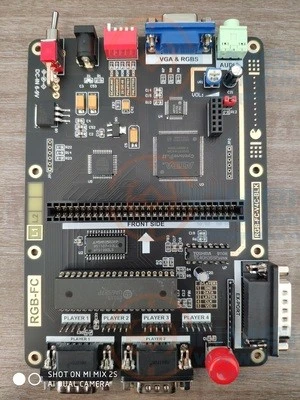
Does the TinyNES output RGB?
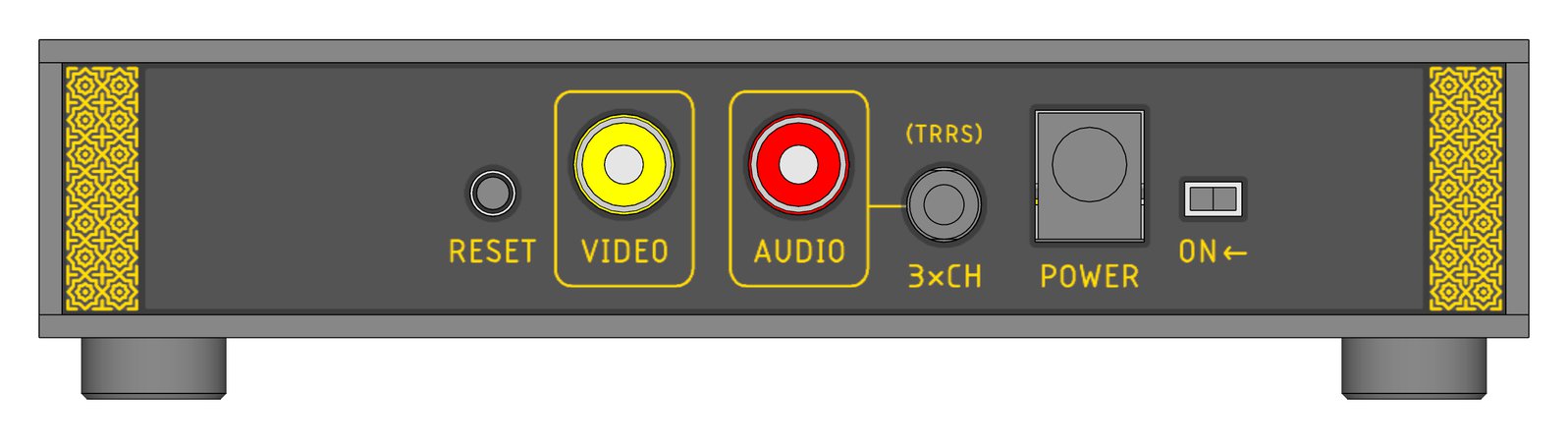
No, not at this time. TinyNES outputs a composite (CVBS) analog NTSC video signal. This is because the primary PPU (picture processing unit) chips (RP2C02 and clones) produce this signal internally and output it on a pin. In this sense, this original video signal is “authentic” and is not being converted, sampled, or modified. Instead of the original single transistor amplifier circuit, the TinyNES uses a THS7314 for a cleaner signal.
There are various approaches to RGB support. One option is the use of different PPU chips, such as the RP2C03, RP2C04, or RP2C05, all of which output native RGB. These were designed and used primarily for arcade cabinets including the PlayChoice-10 and the VS. System, and they are harder to find and often expensive (over $100 each). They also have different color palettes, so some games will look significantly different, depending on the chip.
The other approach to RGB support is to intercept and modify the signals passing through the PPU, or to replace it entirely. The popular NESRGB product does the former. We haven’t tested it with the TinyNES, but in theory it should work, just don’t expect it to fit inside the TinyNES enclosure! We would love to create an RGB version of the TinyNES at some point, but this would involve developing an open-source implementation of an NESRGB-like intercept solution, or the use of a full PPU alternative (we are looking into the UnerversalPPU project). Hopefully this can happen in the future!
Does the TinyNES output HDMI?
No, not at this time. Eventually, we would love to incorporate a high-quality HDMI output into the console itself, which would necessarily have to upconvert the native analog video signal. This is not completely trivial, but it is certainly possible. There are many standalone NTSC to HDMI converter boxes (of widely varying quality) on the market, including products by RetroTINK designed just for this purpose.
Can I play PAL games on the TinyNES?
Sort of, but we don’t recommend it, because they’ll probably run at the wrong speed and could have other issues. PAL and NTSC use different clock frequencies, so just swapping in some PAL chips (RP2A07 and RP2C07) won’t be enough. However, since the changes required for a PAL system wouldn’t be extreme, the future release of a PAL TinyNES is definitely possible. Supporting both PAL and NTSC in the same system is awkward. In fact, clone systems that provided this support were known to have two pairs of chips!
What chip revisions will my TinyNES come with?
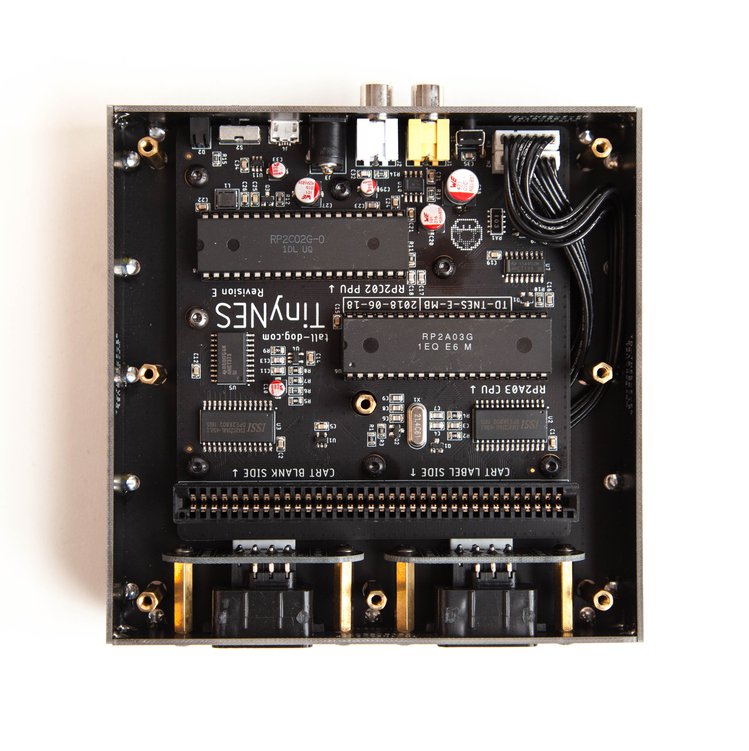
Short answer: It could be any of them! We can’t guarantee any specific revisions with your order, but you can reach out to us if you have any concerns. Sourcing these chips is not a straightforward process. So, we’ve gathered whatever we could get our hands on. We have a whole assortment in our stock, including (but not necessarily limited to):
Genuine CPU: RP2A03, RP2A03E, RP2A03G, RP2A03H
Genuine PPU: RP2C02E-0 RP2C02G-0, RP2C02H-0
Clone CPU: UA6527, UA6527P
Clone PPU: UA6528
Some weird notes: We suspect that a small number of our RP2A03 chips might actually be re-marked UA6527s. This kind of forgery is unfortunately common. But, they do actually work, which is better than most counterfeits. Some of our UA6527 are certainly re-marked UA6527Ps, which is easy to determine because the clock multiplier is different. Any system that comes with a UA6527P (re-marked or not) will have the internal 1.25x CPU clock multiplier enabled so the processor runs at the correct (standard) speed.
Why doesn’t the TinyNES come with four controller ports?
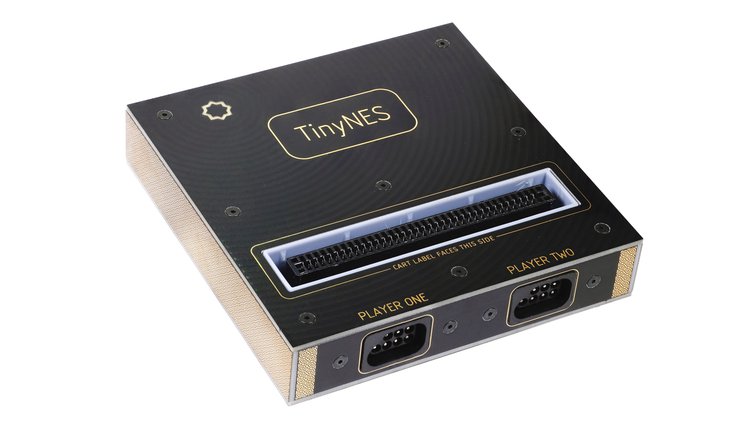
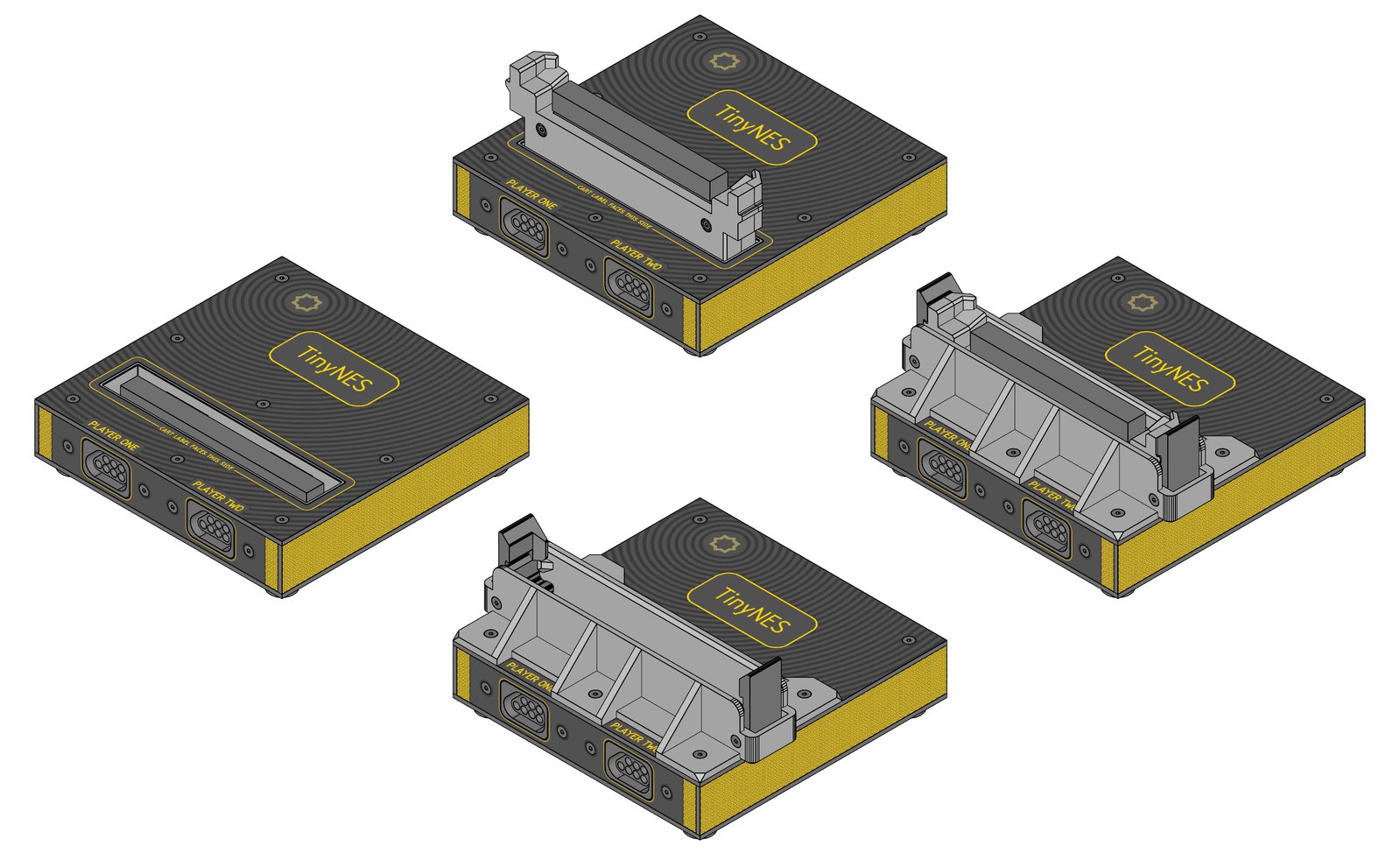
Space! The TinyNES is really small and controller ports take up a lot of room! So only two controller ports are built-in, which is the same number as the original NES.
How will the TinyNES source files be licensed and released?
At the end of the Crowd Supply campaign, all the TinyNES source files will be publicly released on GitHub, not just for backers, but for everyone! The files will be released under the Creative Commons Attribution-ShareAlike 4.0 International (CC BY-SA 4.0) license, which allows you to reuse or adapt them however you like, as long as all derivative work is released under the same (or a compatible) license, and attribution (credit) is given to the original and any other contributing authors. The Tall Dog Electronics logo is excluded and should not be used in any derivative works, since those are your creations, not ours.
Why doesn’t the TinyNES work with the RetroUSB Power Pak?
We don’t know yet. If you want to work on this issue, please let us know! The EverDrive N8 from Krikzz works great. We’re still waiting for our EverDrive N8 PRO to get here, so we’ll let you know once we test it.
Do games with weird pins work with the TinyNES?
Some NES cart PCBs have strange card-edge pads that stop some distance away from the edge of the board. We’re not sure exactly which games have contacts like this, or if all of the PCBs for any particular game are affected. Some anecdotal examples of this so far include certain John Elway’s Quarterback and Dragon Quest (Dragon Warrior) boards. These carts may not function properly in the TinyNES because their weird pads don’t reach far enough into the connector socket. We’re investigating this, and may or may not have a solution for the first hardware production run. If we can’t source a different socket, then these games won’t work without some modification (board edge trimming).
stormlord escribió:199$ con chips genuínos o 179$ con chips truchos
aranya escribió:¿Por que te ibas a gastar 199€ en esto en lugar de cogerte una Famicom AV + 2 mandos + flashcart chino?.
FFantasy6 escribió: la gente que prefiere pagar más porque si vale más es más bueno

"TinyNES is not an emulator or an FPGA-based system"
![[carcajad]](/images/smilies/nuevos/risa_ani2.gif "carcajada")
Dene escribió:Me pone nervioso verla con el cartucho insertado.
luffyelx escribió:@kerobscure Retron 2 no es emuladora?
c4b354 escribió:Pero es una NOAC como tantas otras o aporta algo? Ya podía venir con salida RGB con el cable de la snes o algo. Aún así me gusta el diseño.
aranya escribió:En mi opinión, la gracia está en que NO tenga HDMI. Con HDMI hay setenta opciones diferentes, ¿para que otra más?.
La gracia está en que recree una NES con los componentes principales, sin ser FPGA ni la enésima placa genérica emuladora.
Esto es como una NES nueva. El problema es que si haces una NES nueva, sin ser oficial, sin mandos y la vendes mucho más cara con la única ventaja teórica de ser hardware nuevo, pues como que no.
Yo no pondría la mano en el fuego por qué este cacharro vaya a durar más que mi Famicom AV de 199X.
Otra cosa es este cacharro, con ranura SD y salida RGB. Ahi sí que te ahorras flashcart y tienes RGB.
aranya escribió:Yo no pondría la mano en el fuego por qué este cacharro vaya a durar más que mi Famicom AV de 199X.
aranya escribió:@Nepal77 es que al recrear la placa, pues su público objetivo lo veo más de CRT. Por eso digo lo del HDMI.
Por cierto, ya lleva el 200% recaudado. Y 146 personas que han comprado. Aún le quedan bastantes días.
Creo que con RGB y microSD, hubiera triunfado más.
Nepal77 escribió:Sin HDMI ¿que sentido tiene?
Para eso te compras una original o una clonica de su época que tenian también mucha calidad.
Esto no deja de ser una creation o una nasa actual.c4b354 escribió:Pero es una NOAC como tantas otras o aporta algo? Ya podía venir con salida RGB con el cable de la snes o algo. Aún así me gusta el diseño.
Parece que lleva mas cosas que una NOAC que es un simple pegote con todo insertado.
Esto parece mas una creation o una nasa actual.
Pero técnicamente vas a tener el mismo rendimiento con una NOAC tipo retron HD que ademas tendrá HDMI por 50 euros.
luffyelx escribió:@kerobscure Retron 2 no es emuladora?

![[angelito]](/images/smilies/nuevos/angelito.gif "angelito") , se ve interesante el cacharro pero 200 perros me parece una soberana sobrada por un ¿semi-clon? (no sabría como definirlo
, se ve interesante el cacharro pero 200 perros me parece una soberana sobrada por un ¿semi-clon? (no sabría como definirlo ![[+risas]](/images/smilies/nuevos/risa_ani3.gif "más risas") ), habiendo múltiples alternativas y bastante más económicas.
), habiendo múltiples alternativas y bastante más económicas. 
![[Ooooo]](/images/smilies/nuevos/sorprendido_ani1.gif "Oooooo")
Sexy MotherFucker escribió:La gracia está también en qué NO lleve RGB, porque las Famicom/NES no es que no incorporasen “salida” RGB por abaratar costes como hacían otras consolas, sino que su sistema gráfico no PODÍA interpretar esa señal de ninguna manera. El mod RGB de la NES es tan especial por eso, porque aparte de la salida óptica hay que implementar hardware que sepa escupir RGB.
El apartado artístico (colores y tal) de los juegos en NES es 100% como se ven en vídeo compuesto. A quien le guste más como cambia en RGB perfecto, pero no está viendo lo que los desarrolladores hicieron originalmente, sino algo mejor o peor, depende del gusto y resultado.
Esto es en toda regla una NES clónica con hardware original y componentes nuevos y sin deterioro del 2021, multiregión de serie, y ergonomica que te cagas; un producto para que disfrutes del aroma original pero sin el moho del paso de los años, salvo el de los cartuchos claro
Me gusta y si tiene buen precio lo mismo me pillo para una para darme el gustazo de insertar cartuchos en hardware original virgen y reluciente.
Clónicas actuales con hard original, hard original amarillento y con componentes Chungos, FGPAS, emulación; a mí me encanta todo, soy Politoxicomano
llorllo escribió:Es como la MD Lite que sacaron hace un tiempo. En ese caso, usaban componentes de la Genesis 3
https://es.aliexpress.com/item/10050030 ... 63c03zjZKA
Eran caras (sobre 150$ si no recuerdo mal), pero la calidad de imagen era muy buena, eliminando jailbars, region free, posibilidad de forzar 60Hz...
A mi porque no me interesa la NES, pero entre gastarme 100€ en un producto de hace 40 años, prefiero gastarme un poco más y tener la esperanza de que su durabilidad será mayor. No digo que sea el caso, pero cuando ya has "enterrado" varias consolas, ves que tener hardware antiguo para ser usado puede no tener tanto sentido como creía al principio.
Este producto hace lo mismo, y con sus mismas limitaciones, que una NES o una creation pero mucho mas cara

![[qmparto]](/images/smilies/net_quemeparto.gif "Que me parto!")
![[poraki]](/images/smilies/nuevos/dedos.gif "por aquí!")
![[agggtt]](/images/smilies/nuevos2/infeliz.gif "uf")